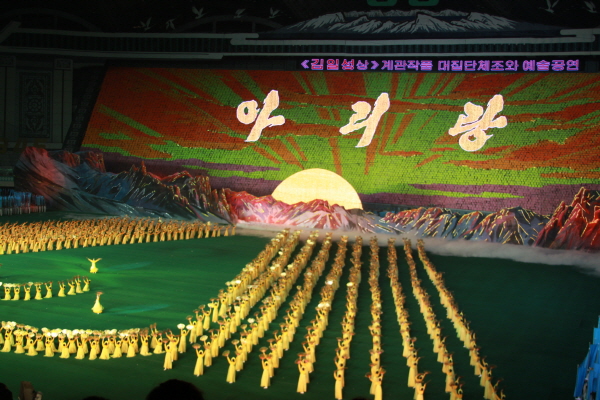
The Grand Mass
Gymnastics and Artistic Performance Arirang (Hangul:
아리랑 축제 Hanja:
아리랑 祝祭)
are held in the Rungrado May Day Stadium in
Pyongyang, North Korea. The two-month gymnastics and
artistic festival celebrates the birthday of Kim
Il-sung (15 April).
History
The festival has been held
from August until October since 2002-2005, and 2007
until the present.
Throughout
their long history, Koreans have had an outstanding love of music and
dance. In the distant past, villagers gathered to sing and dance to
celebrate planting and harvesting, which was probably the origin of folk music
and dance, still widely enjoyed and appreciated. Korean traditional music
can be divided into two major types: chong-ak for the noble class and sogak
for the common people. Chong-ak consists of music performed at
court and tended to be slow and solemn with elaborate melodic lines. Sogak
included shaman and Buddhist music, folk songs and dramatic songs and was
usually more colorful and vibrant, appealing to the emotions.
Western
music was introduced at the end of the 19th century and gained rapid
acceptance. Today, there are a number of Korean musicians performing and
competing internationally.
Traditional
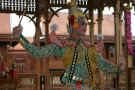
Korean dance may be divided into court dance, folk dance, ritual dance and the
dance of professional entertainers. Court dances are slow, stately and
elegant with restrained, balanced movement. Folk dance includes farmers
dance, mask dance-dramas and various group dances combining song and dance,
often accompanying work. Ritual dance included sedate Confucian dances
more lively shaman and Buddhist dances and funeral dances. Professional
entertainers performed both court and folk dances. Many of their dances
combined features of the two. Many traditional dances were forgotten
during the colonial period and the chaotic early years of the Republic, but in
the 1980s, interest in these long-forgotten dances revived and several were
designated Intangible Cultural Properties by the Government with their
performers being designated Human Cultural Treasures.
Disclaimer:
AsianInfo.org
does not guarantee the complete accuracy of the information provided on
this site or links. Do your own research and get a professional's
opinion before adhering to advice or information contained herein.
Use of the information contained herein provided by AsianInfo.org and
any mistakes contained within are at the individual risk of the user.
(We
do not provide links to, or knowingly promote, any violent or pornographic
sites.)