|

Parliamentary
History
The
Muslims of India had, since the middle of nineteen
century, begun the struggle for a separate homeland on the
basis of the two Nation theory.
The British rulers realized that the Hindus and
Muslims of India remained two separate and distinct
nations and socio-cultural entities. The British rulers
were left with no option but to eventually accept the
demand of the Muslims of India.
On
3rd June1947, Lord Mountbatten, the last
Viceroy of India, called the conference of all the leaders
of the Sub-continent and communicated to them his
Government's Plan for the transfer of power.
At that time, a notification was issued in the
Gazette of India, published on 26th July 1947
in which the first Constituent Assembly of Pakistan was
given shape with 69 Members (later on the membership was
increased to 79), including one female Member.
The
State of Pakistan was created under the Independence Act
of 1947. The
Act made the existing Constituent Assemblies, the dominion
legislatures. These Assemblies were allowed to exercise
all the powers which were formerly exercised by the
Central Legislature, in addition to the powers regarding
the framing of a new Constitution, prior to which all
territories were to be governed in accordance with the
Government of India Act, 1935.
The
first session of the first Constituent Assembly of
Pakistan was held on
10th August 1947
at Sindh Assembly Building Karachi.
On
11th August 1947
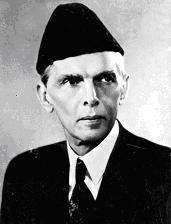
Quaid-i-Azam Muhammad Ali Jinnah was elected unanimously
as the President of the Constituent Assembly of Pakistan
and the National Flag was formally approved by the
Assembly.
 On
12th August 1947
, a resolution was approved regarding officially
addressing Mr. Muhammad Ali Jinnah as "Quaid-i-Azam
Muhammad Ali Jinnah".
On the same day, a special committee called the
"Committee on Fundamental Rights of Citizens and
Minorities of Pakistan" was appointed to look into
and advise the Assembly on matters relating to fundamental
rights of the citizens, particularly the minorities, with
the aim to legislate on these issues appropriately.
On
14th August 1947
, the Transfer of Power took place.
Lord Mountbatten, Governor General of
India
, addressed the Constituent Assembly of Pakistan.
The Quaid gave a reply to the address in the House,
on which the principles of the State of Pakistan were
laid. On
15th August 1947
, Quaid-i-Azam was sworn in as the first Governor General
of
Pakistan
. Mian Sir
Abdur Rashid, Chief Justice of Pakistan, administered oath
of office from him. The
Quaid remained in this position till his death i.e.11th
September 1948.
more.... On
12th August 1947
, a resolution was approved regarding officially
addressing Mr. Muhammad Ali Jinnah as "Quaid-i-Azam
Muhammad Ali Jinnah".
On the same day, a special committee called the
"Committee on Fundamental Rights of Citizens and
Minorities of Pakistan" was appointed to look into
and advise the Assembly on matters relating to fundamental
rights of the citizens, particularly the minorities, with
the aim to legislate on these issues appropriately.
On
14th August 1947
, the Transfer of Power took place.
Lord Mountbatten, Governor General of
India
, addressed the Constituent Assembly of Pakistan.
The Quaid gave a reply to the address in the House,
on which the principles of the State of Pakistan were
laid. On
15th August 1947
, Quaid-i-Azam was sworn in as the first Governor General
of
Pakistan
. Mian Sir
Abdur Rashid, Chief Justice of Pakistan, administered oath
of office from him. The
Quaid remained in this position till his death i.e.11th
September 1948.
more....
History
Pakistan, along with
parts of western India, contains the archeological remains
of an urban civilization dating back 4,500 years.
Alexander the Great included the Indus Valley in his
empire in 326 B.C., and his successors founded the
Indo-Greek kingdom of Bactria based in what is today
Afghanistan and extending to Peshawar. Following the rise
of the Central Asian Kushan Empire in later centuries, the
Buddhist culture of Afghanistan and Pakistan, centered on
the city of Taxila just west of Islamabad, experienced a
cultural renaissance known as the Gandhara period.
Pakistan's Islamic
history began with the arrival of Muslim traders in the
8th century in Sindh. The collapse of the Mughal Empire in
the 18th century provided an opportunity to the English
East India Company to extend its control over much of the
subcontinent. The Sikh adventurer Ranjit Singh carved out
a dominion that extended from Kabul to Srinagar and
Lahore, encompassing much of the northern area of modern
Pakistan. British rule replaced the Sikhs in the first
half of the 19th century. In a decision that had
far-reaching consequences, the British permitted the Hindu
Maharaja of Kashmir, a Sikh appointee, to continue in
power.
Pakistan emerged from an
extended period of agitation by Muslims in the
subcontinent to express their national identity free from
British colonial domination as well as domination by what
they perceived as a Hindu-controlled Indian National
Congress. Muslim anti-colonial leaders formed the
All-India Muslim League in 1906. Initially, the League
adopted the same objective as the
Congress--self-government for India within the British
Empire--but Congress and the League were unable to agree
on a formula that would ensure the protection of Muslim
religious, economic, and political rights
Other
Sources
The Indus region, which covers a considerable amount of
Pakistan, was the site of several ancient cultures
including the Neolithic era's Mehrgarh and the bronze era
Indus Valley Civilisation (2500–1500 BCE) at Harappa and
Mohenjo-Daro.
Waves of conquerors and migrants from the
west—including Harappan, Indo-Aryans, Persians, Greeks,
Sakas, Parthians, Kushans, Hephthalites, Afghans, Arabs,
Turks and Mughals—settled in the region throughout the
centuries, influencing the locals and being absorbed among
them. Ancient empires of the east—such as the Nandas,
Mauryas, Sungas, Guptas and the Palas—ruled these
territories at different times from Patliputra.
However, in the medieval period, while the eastern
provinces of Punjab and Sindh grew aligned with
Indo-Islamic civilisation, the western areas became
culturally allied with the Iranian civilisation of
Afghanistan and Iran. The region served as a crossroads of
historic trade routes, including the Silk Road, and as a
maritime entreport for the coastal trade between
Mesopotamia and beyond up to Rome in the west and Malabar
and beyond up to China in the east.
Modern day Pakistan was at the heart of the Indus
Valley Civilisation; that collapsed in the middle of the
2nd millennium BCE and was followed by the Vedic
Civilisation, which also extended over much of the Indo-Gangetic
plains. Successive ancient empires and kingdoms ruled the
region: the Achaemenid Persian empire around 543 BCE, the
Greek empire founded by Alexander the Great in 326 BCE and
the Mauryan empire founded by Chandragupta Maurya and
extended by Ashoka the Great, until 185 BCE.
The Indo-Greek Kingdom founded by Demetrius of Bactria
included Gandhara and Punjab from 184 BCE, and reached its
greatest extent under Menander, establishing the
Greco-Buddhist period with advances in trade and culture.
The city of Taxila (Takshashila) became a major centre of
learning in ancient times—the remains of the city,
located to the west of Islamabad, are one of the country's
major archaeological sites.]
The Rai Dynasty (c.489–632) of Sindh, at its zenith,
ruled this region and the surrounding territories.

Menander I was a Bactrian ruler, who established one
of the Indo-Greek Kingdom which existed in the
territory of modern day Pakistan
In 712 CE, the Arab general Muhammad bin Qasim
conquered Sindh and Multan in southern Punjab. The
Pakistan government's official chronology states that
"its foundation was laid" as a result of this
conquest. This Arab and Islamic victory would set the
stage for several successive Muslim empires in South Asia,
including the Ghaznavid Empire, the Ghorid Kingdom, the
Delhi Sultanate and the Mughal Empire. During this period,
Sufi missionaries played a pivotal role in converting a
majority of the regional Buddhist and Hindu population to
Islam.
The gradual decline of the Mughal Empire in the early
eighteenth century provided opportunities for the Afghans,
Balochis and Sikhs to exercise control over large areas
until the British East India Company gained ascendancy
over South Asia. The Indian Rebellion of 1857, also known
as the Sepoy Mutiny, was the region's last major
armed struggle against the British Raj, and it laid the
foundations for the generally unarmed freedom struggle led
by the Indian National Congress in the twentieth century.
In the 1920s and 1930s, a movement led by the Hindu
politician Mahatma Gandhi, and displaying commitment to
long enshrined Hindu tenet of ahimsa, or
non-violence, engaged millions of protesters in mass
campaigns of civil disobedience.
.jpg/220px-Badshahi_Mosque_July_1_2005_pic32_by_Ali_Imran_(1).jpg)
17th Century Badshahi Masjid built during Mughal
rule
The All India Muslim League rose to popularity in the
late 1930s amid fears of under-representation and neglect
of Muslims in politics. On 29 December 1930, Allama
Iqbal's presidential address called for an autonomous
"state in northwestern India for Indian Muslims,
within the body politic of India. Quaid e Azam Muhammad
Ali Jinnah espoused the Two Nation Theory and led
the Muslim League to adopt the Lahore Resolution of
1940, popularly known as the Pakistan Resolution. In early
1947, Britain announced the decision to end its rule in
India. In June 1947, the nationalist leaders of British
India—including Nehru and Abul Kalam Azad on behalf of
the Congress, Jinnah representing the Muslim League, and
Master Tara Singh representing the Sikhs—agreed to the
proposed terms of transfer of power and independence.
The modern state of Pakistan was established on 14
August 1947 (27 Ramadan 1366 in the Islamic Calendar),
carved out of the two Muslim-majority wings in the eastern
and northwestern regions of British India and comprising
the provinces of Balochistan, East Bengal, the North-West
Frontier Province, West Punjab and Sindh. The
controversial, and ill-timed, division of the provinces of
Punjab and Bengal caused communal riots across India and
Pakistan—millions of Muslims moved to Pakistan and
millions of Hindus and Sikhs moved to India.
Disputes arose over several princely states including
in the Muslim-majority Jammu and Kashmir, whose Hindu
ruler had acceded to India following an invasion by
Pashtun tribal militias, leading to the First Kashmir War
in 1948.

The Working Committee of the Muslim League in Lahore
(1940)
From 1947 to 1956, Pakistan was a Dominion of Pakistan
in the Commonwealth of Nations. It became a Republic in
1956, but the civilian rule was stalled by a coup d’état
by General Ayub Khan, who was president during 1958–69,
a period of internal instability and a second war with
India in 1965. His successor, Yahya Khan (1969–71) had
to deal with a devastating cyclone—which caused 500,000
deaths in East Pakistan—and also face a civil war in
1971. Economic grievances and political dissent in East
Pakistan led to violent political tension and military
repression that escalated into a civil war.After nine
months of guerrilla warfare between the Pakistan Army and
the Indian backed Bengali Mukti Bahini militia, Indian
intervention escalated into the Indo-Pakistani War of
1971, and ultimately to the secession of East Pakistan as
the independent state of Bangladesh.

The first Governor General Muhammad Ali Jinnah
delivering the opening address on 11 August 1947 to
the new state of Pakistan.
Civilian rule resumed in Pakistan from 1972 to 1977
under Zulfikar Ali Bhutto, until he was deposed and later
sentenced to death in 1979 by General Zia-ul-Haq, who
became the country's third military president. Zia
introduced the Islamic Sharia legal code, which increased
religious influences on the civil service and the
military. With the death of President Zia in a plane crash
in 1988, Benazir Bhutto, daughter of Zulfikar Ali Bhutto,
was elected as the first female Prime Minister of
Pakistan. Over the next decade, she fought for power with
Nawaz Sharif as the country's political and economic
situation worsened. Pakistan got involved in the 1991 Gulf
War and sent 5,000 troops as part of a U.S.-led coalition,
specifically for the defence of Saudi Arabia.
Military tensions in the Kargil conflict with India
were followed by a Pakistani military coup d'état in 1999
in which General Pervez Musharraf assumed vast executive
powers. In 2001, Musharraf became President after the
controversial resignation of Rafiq Tarar. After the 2002
parliamentary elections, Musharraf transferred executive
powers to the newly elected Prime Minister Zafarullah Khan
Jamali, who was succeeded in the 2004 prime-ministerial
election by Shaukat Aziz. On 15 November 2007, the
National Assembly, for the first time in Pakistan's
history, completed its tenure and new elections were
called. The exiled political leaders Benazir Bhutto and
Nawaz Sharif were permitted to return to Pakistan.
However, the assassination of Benazir Bhutto during the
election campaign in December led to postponement of
elections and nationwide riots. Bhutto's Pakistan Peoples
Party (PPP) won the largest number of seats in the
elections held in February 2008 and its member Yousaf Raza
Gillani was sworn in as Prime Minister. On 18 August 2008,
Pervez Musharraf resigned from the presidency when
threatened with impeachment, and was succeeded by current
president Asif Ali Zardari. By the end of 2009, more than
3 million Pakistani civilians have been displaced by
the on going conflict in North-West Pakistan between the
government and Taliban militants.
wikipedia
|









.jpg)