AsianInfo.org
supports
I.C.E.Y. - H.O.P.E. (non-profit
org) (International
Cooperation of Environmental Youth - Helping Our Polluted Earth)
Any advertisement you view helps save the environment!
Thanks!
Korea is divided into two
districts; highland and lowland. In the highlands are the Myohyangsan and
T'aebaeksan mountains, and are home to deer, roe deer, Amur goral, sable, brown
bear, tiger, lynx , northern pika, water shrew, muskrat, Manchurian ring-necked
pheasant, black grouse, hawk owl, pine grosbeak and the three-toed
woodpecker. The lowlands (peninsula) have a mild climate which is the
habitat of black bear, river deer, mandarin vole, white-bellied black (or
Tristram's) woodpecker, faiy pitta and ring-necked peasant.
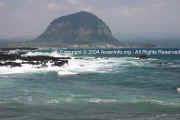
Chejudo island, located south of
the Korean peninsula, has seventeen species of terrestrial mammals; but the wild
bear, deer, and wild cats are now extinct. Animal inhabitants of Chejudo
are roe deer, weasel, hamster, field mouse, house rat, and two bat species.
Due
to the Korean Peninsula's long north-south stretch and topographic complexity,
there are wide variations in temperature and rainfall. The mean temperature
throughout the four seasons ranges from 5oC to 16oC and
rainfall from 500 to 1,500 millimeters. Such an environment makes the land a
diversified floral region. Lee Woo-tchul's Lineaments Florae Korea (1997) listed
190 families, 1,079 genera, 3,129 species, 8 subspecies, 627 varieties, 1
subvariety and 306 forms of higher plants, including pteridophytes. This means
that more than 4,000 kinds of vascular plants, including about 570 endemics are
currently growing in the country.
AsianInfo.org
supports I.C.E.Y. -
H.O.P.E. (non-profit org) (International
Cooperation of Environmental Youth - Helping Our Polluted
Earth) Any advertisement you view helps save the
environment! Thanks!
Disclaimer:
AsianInfo.org
does not guarantee the complete accuracy of the information provided on
this site or links. Do your own research and get a professional's
opinion before adhering to advice or information contained herein.
Use of the information contained herein provided by AsianInfo.org and
any mistakes contained within are at the individual risk of the
user.
(We
do not provide links to, or knowingly promote, any violent or pornographic
sites.)