|

|
Go
Green
Revolution
(GG
Revolution)
The
19th century had the Industrial
Revolution, the 20th century had the IT
revolution and now the Go
Green
Revolution is for the 21st century.... |
It
has been only in recent years that the economy of
China has improved. Early in history, it was an
agricultural controlled culture, manned by the
peasants. Essentially, it was an economy owned by
a unitary public. It was a weak economy in which
there was an unbalance between industries.
At
first, China had a potentially progressive
economy, however it seemed to diminish during the
13th and 14th centuries. One
due to the massive amount of manpower available,
which in turn discouraged the development of time
saving methods.
The
other was the strict rule of the government, one
that didn’t encourage personal initiatives and
creativity. It lacked vitality and life. Because
of its weak economy, it fell easily to political
powers stronger that itself. By 1949, China was
ready to reconstruct the country.
Travel
Information on China
Unfortunately,
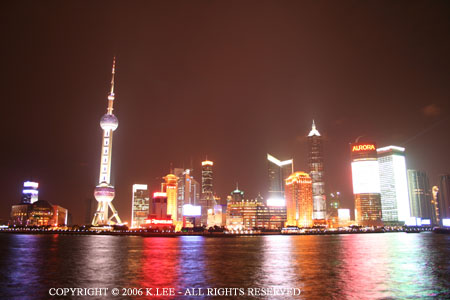
most of the industries were around the coastal
regions, where most of the foreign companies had
set up business. It was during this time that
economic policies were set into play. First, it
was important to strengthen the role agriculture
played.
Second,
the imbalance with industry between the coastal
regions and the inner regions needed to be
corrected. In order to do so, a plant was built in
towns without industry, closer to where the raw
materials could be obtained. To open up desert
areas for further expansion, they improved land
drainage, river control and dam construction.
Also, they laid out improved roads and further
expanded the railway system.
By
1976, another five-year plan was set into motion.
Reforms were introduced in agriculture and
industry. Mainly to encourage private, profiteers
to the economy.
It
was during the 7th five-year plan that
the economy began to improve. Prices, taxation,
credit and wages were regulated. Also, coastal
regions and towns were given economic privileges,
including better working conditions. These led to
a larger increase in the gross national product.
It also led to higher levels of inflation and
helped to decrease the budget deficit.
The
8th five-year plan was a continuation
of improving raw material production.
Back
to Top
By
1992, state controlled industry declined, given
precedence to the private industries. Since
reformation, many outside foreign companies have
been interested in China. However, most of the
interest has been relegated to the coastal areas.
Those on the interior of China have had the least
growth.
This
is one of the problems faced with economic growth.
Another is the loss incurred by the state run
industries. In turn, many workers are leaving the
inland industries and head to the coastal
provinces for better work.
The
ninth five-year plan put together new objectives.
One of which was to continue with the plan for
modernization in an all-round way. Also, to raise
people’s standard of living and have poverty
almost erased. Basically, establish the basis of a
socialist market economy. By 2010, China hopes to
double the gross national product of the year
2000, to bring people to an even more comfortable
standard of living.
Back
to Top
China
has maintained favorable trade relations with
other countries since the 1990’s. Unfortunately
imports from South Korea, Japan, Taiwan and Hong
Kong are higher than exported goods. These
countries generally are importing machinery,
transport equipment, and chemical products into
China. The three top trade partners are Hong Kong,
Japan and the USA.
Another
source for the upkeep of the economy is the
reliability on tourism. The riots and trouble in
Tiananmen Square abruptly stopped all tourism in
the area. With "Visit China Year"
designated in 1992, tourism increased to about 4
million. Unfortunately, problems with not enough
hotels, bad accommodations and not many flights
into the area, are slowly pulling down the
potentially high tourism trade. Airports can
usually be found in the Special Economic zones and
around the coastal areas.
Back
to Top
Extra
Information
|